
HDB Aircon Installation: Permits and Regulations in Singapore
TL:DR
For flats completed after 1 January 1994, you generally don’t need a separate HDB permit for a standard aircon installation on the existing ledge — but resale flats on an older 30A main switch may still need one, so check your electrical loading via HDB’s e-Service first.
Key requirements at a glance:
- Installer: Must be BCA-trained — this is a legal requirement, not optional.
- Electrical loading: Total running current must stay within HDB’s limits (5.00A for 1-/2-room flats; 8.50A for 3-room and larger; up to 11.00A for converted 5-bedroom Executive Apartments).
- Outdoor unit: Must go on the pre-built aircon ledge, weight capped at 80 kg (110 kg per panel for upgraded flats). Max 2 condensing units allowed on a 40A main switch.
- Timeline: Installation typically takes 1–2 days across 4 steps — site assessment, permits (if needed), physical installation, and post-installation testing.
- Reporting: Your installer must file a report with HDB within 14 days of completing the work — ask upfront if they’ll handle this.
Bottom line: the real planning happens before installation day — confirming electrical capacity, permit status, and piping routes during the site visit prevents costly mid-renovation changes.
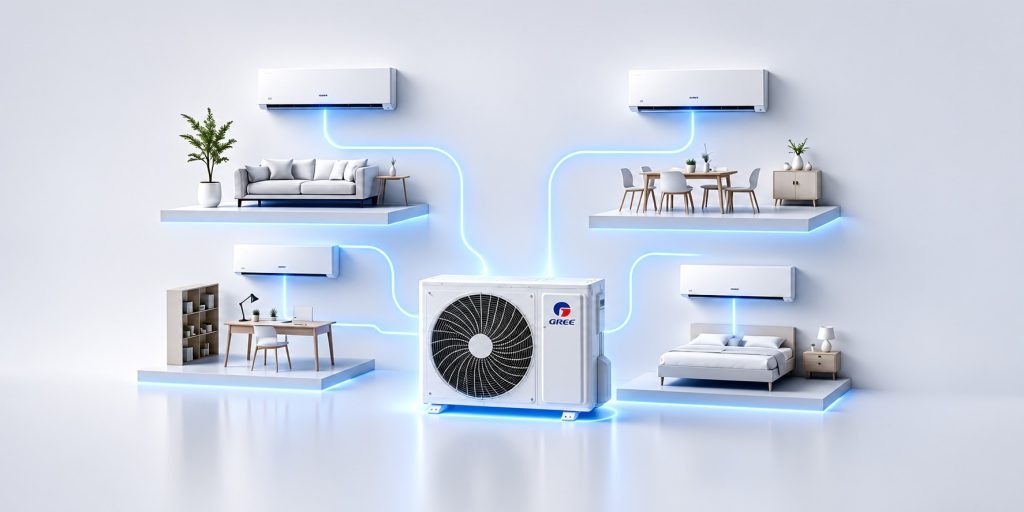
What Do You Need to Check Before HDB Aircon Installation?
Before installation day arrives, there are several things worth confirming. The exact requirements depend on the flat’s electrical configuration and the proposed installation arrangement.
The Site Visit
Before anything gets installed, your dealer should come down to look at your actual flat, not just work off a floor plan.
What they’re checking:
- Where each indoor unit goes, to ensure airflow coverage and avoid short-cycling (air blowing back into the unit before it’s circulated through the room).
- Where your aircon ledge is, since that determines where the outdoor condensing unit sits. HDB flats have this ledge pre-built, and the outdoor unit generally has to go there. For the latest requirements, homeowners can also refer to HDB’s official air-conditioner installation page.
- How the copper piping will run, ideally inside conduits or trunking that’s accessible later, not buried behind fixed carpentry you’d have to tear open for routine servicing or gas top-up.
This is also where “future-proofing” actually means something practical: piping and drainage laid out so that when your aircon needs servicing, decommissioning, or a compressor swap five years from now, nobody has to hack through your wardrobe to get to it.
Does Aircon Installation HDB Require a Permit?
For flats completed after 1 January 1994, you generally don’t need a separate HDB Aircon Installation Permit for a standard installation on the existing aircon ledge, and HDB’s own guidance confirms this. You can check the specifics on HDB’s official air-conditioner installation page.
If you’re on a resale flat, the deciding factor is your electrical loading, not the flat’s age alone. Flats that went through the Main Upgrading Programme (MUP) or Home Improvement Programme (HIP) are usually upgraded to a 40-ampere main switch, and no permit is needed in that case either. Older flats still on a 30A main switch may need an application before installing. You can check your flat’s electrical loading directly via HDB’s e-Service rather than guessing.
A caveat worth flagging: permit requirements can be updated, and edge cases (structural brackets, non-standard ledge positions, older blocks without a proper ledge) may still require an application even on newer flats. When in doubt, this is exactly the kind of thing your installer should confirm during the site visit, not something to assume from a blog post, including this one.
Step-by-Step Installation Process & Expected Timeline
Installing an HDB aircon unit typically takes 1 to 2 days, depending on system complexity and flat condition. A standard installation follows these 4 steps:
- Pre-Installation Site Assessment: The installer inspects the electrical main switch, wall structures, and drainage routes to select compliant mounting positions.
- Permits & Application Submission: If new electrical wiring (Form CS/5H) or special permits are needed, approval is obtained before installation.
- Physical Installation & Internal Piping: Technicians mount indoor brackets, place the outdoor condenser on solid load-bearing structures/ledges, run insulated internal piping, and test electrical connections.
- Post-Installation Testing & HDB Reporting: After checking for leaks and electrical stability, the BCA-trained installer submits an installation report to the HDB Branch within 14 days.
How Much Electrical Load Does Your Aircon Need?
The electrical load of the air-conditioning system is another important part of planning an HDB installation.
HDB requires homeowners and installers to verify that the total running current of the air-conditioning condensing unit or units does not exceed the approved electrical rating before installation.
For flats under the applicable 30-amp electrical loading guidelines, HDB specifies the following maximum total running currents:
Flat Type | Maximum Total Running Current |
1-Room / 2-Room | 5.00 amps |
3-Room / 4-Room / 5-Room | 8.50 amps |
Executive Maisonette / Multi-Generation | 8.50 amps |
Executive Apartment with 4 bedrooms | 8.50 amps |
Executive Apartment with 5 bedrooms in converted block | 11.00 amps |
HDB also has separate requirements for flats provided with a 40-amp main switch. For these flats, the air-conditioner’s running current should still be restricted through the specified 20-amp double-pole isolator or 15-amp power point.
The figures above refer to the applicable total running current, rather than simply the current rating of one air-conditioning unit. Homeowners planning a multi-split system should consider the overall system configuration rather than one indoor unit in isolation.
How Much Current Does an Aircon Use?
An air conditioner’s electrical demand varies by capacity and model.
For example, the GREE SP Series single-split models have the following rated running currents:
GREE SP Model | Cooling Capacity | Rated Running Current |
GWC-09SP | 9,000 BTU/h | 2.8A |
GWC-12SP | 12,000 BTU/h | 3.2A |
GWC-18SP | 17,060 BTU/h | 5.2A |
These figures are useful as a reference when comparing air-conditioning options, but they should not be used on their own to determine whether a particular HDB electrical setup is suitable. The actual installation should be assessed based on the flat’s electrical configuration and the complete system.
For multi-split systems, the overall running current can also vary according to the combination of indoor units. The GREE SP Series catalogue provides different combinations and corresponding running-current figures for multi-room configurations. Always ensure to correctly match the outdoor air-con unit to the total system load.
HDB Aircon Installation Checklist
Before starting your HDB aircon installation, confirm the following items:
- Check flat electrical capacity (40-Amp provision vs. standard loading).
- Verify if an electrical permit or HDB permit is required.
- Hire a BCA-trained air-conditioning installer.
- Ensure the outdoor unit weight stays within 80 kg (or 110 kg per panel for upgraded flats).
- Route all piping internally with proper floor-trap drainage.
- Avoid hacking into reinforced concrete structures.
- Maintain clear, unenclosed space on the aircon ledge.
- Obtain and file the 14-day post-installation report.
Final Thoughts on HDB Aircon Installation
A successful HDB aircon installation starts before the technicians arrive.
Checking your flat’s electrical loading, understanding whether a permit is required, confirming the outdoor unit arrangement and planning the piping route can help prevent avoidable changes during installation.
Gree’s dealer network in Singapore is made up of BCA-trained installers, so the safety and compliance side isn’t something you have to chase separately. It’s part of the installation. If you’re planning your BTO renovation or replacing an ageing system in a resale flat, get in touch with us and we’ll walk you through the site visit, the piping plan, and where your units should actually go, before your ID starts closing up the walls around them.
Frequently Asked Questions
Can I install an HDB air conditioner myself?
HDB requires it for any installation involving an outdoor condensing unit, and it’s a legal requirement, not just best practice. HDB’s own page on aircon installation states this plainly: homeowners are responsible for the safety and stability of their aircon installation, and only BCA-trained installers should be engaged.
Who submits the HDB aircon installation report?
A BCA-trained installer is responsible for submitting an installation report to HDB within 14 days of completing the work. If your installer can’t tell you they’ll be doing this, that’s worth asking about before you sign anything.
Can I install multiple outdoor units?
The number and positioning of outdoor condensing units depend on the applicable HDB requirements. For flats with a 40-amp main switch, HDB specifies that a maximum of two split-type condensing units can be installed, with additional conditions applying to wall-mounted units.