
How to Clean Air-Conditioner Filter
TL;DR
Cleaning frequency: No fixed schedule — check every 2–4 weeks for nightly use (more often with pets, cooking, or dust). Clean whenever you see visible dust on the filter.
How to clean: Switch off and unplug → open panel and remove filter → vacuum/brush off loose dust → rinse with water if allowed (no harsh chemicals or scrubbing) → air-dry completely → reinstall.
When to replace, not clean: If the filter is torn, warped, doesn’t fit securely, or stays dirty even after cleaning.
Watch for: weaker airflow, longer cooling times, visible dust, or odours. If cleaning doesn’t help, the issue is likely elsewhere (coils, drainage, refrigerant) — call a technician.
Key limit: Cleaning restores normal airflow, not cooling power. It won’t make an undersized unit cool like a bigger one.
Bottom line: Simple, regular filter care keeps the system performing as designed — but it’s not a substitute for professional servicing.
In Singapore, air conditioners are often used throughout the year. Whether it is cooling an HDB bedroom at night or keeping the living room comfortable during the day, regular aircon maintenance is important for maintaining consistent cooling performance.
Knowing how to clean the air conditioner filter properly, how often to clean it, and when it is time to replace the aircon filter can help Singapore households keep their air conditioning system running smoothly.
Why Are Air Conditioner Filters Important?
The filter inside an indoor air conditioning unit is designed to catch dust and other airborne particles before air passes through the unit. As the filter becomes covered with dust, it becomes harder for air to pass through.
This matters because an air conditioner needs to circulate enough room air through the indoor unit to remove heat effectively. When a dirty filter restricts airflow, less warm room air can pass over the indoor unit’s cooling coil. At the same time, less cooled air can be circulated back into the room. As a result, the air conditioner may take longer to bring the room down to the set temperature. You may also notice weaker airflow from the indoor unit, even though the air conditioner is still running.
For households that run their air conditioner regularly, keeping the air conditioner filters reasonably clean helps maintain proper airflow and allows the system to operate closer to its intended cooling performance.
Please note: Filter cleaning helps maintain proper airflow, but it does not replace professional aircon servicing. If cooling remains weak after cleaning, the unit may require further inspection.
How Often Should You Clean an Aircon Filter?
There is no single cleaning schedule that suits every household. The appropriate frequency depends on how often the air conditioner is used and the indoor environment.
For an air conditioner used almost every night, checking the filter about once every two to four weeks is a practical starting point. Homes with pets, frequent cooking, or more noticeable dust may need more frequent cleaning.
If the air conditioner is used less often, the filter can be checked less frequently. The important point is to inspect it regularly rather than waiting until airflow has noticeably weakened.
A quick visual inspection can usually tell you whether cleaning is necessary. After lifting the front panel of the indoor unit, if you can see a visible layer of dust covering the filter, it is time to clean it.
How to Clean Air Conditioner Filters Step by Step
Learning how to clean air conditioner filters is relatively straightforward, but the process should always follow the instructions for your particular model.
1. Switch Off the Air Conditioner
Turn off the air conditioner and disconnect the power before opening the indoor unit. This provides a safer working environment and prevents the unit from operating while the filter is being removed.
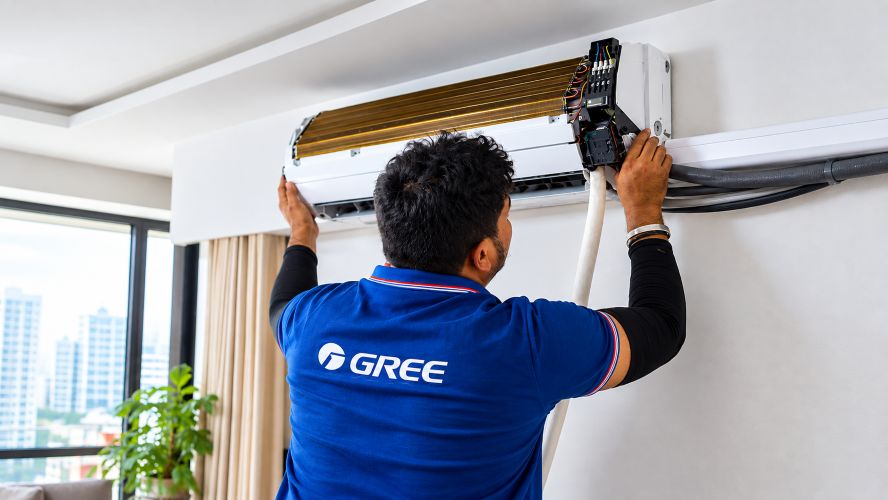
2. Open the Aircon Front Panel
Carefully lift or open the front panel according to the manufacturer’s instructions. The filters are normally positioned behind the front panel and can usually be removed by sliding or lifting them out.
*If the panel feels stuck, do not force it open. Please contact the Gree Singapore Customer Care team for assistance.
3. Remove Loose Dust
Take the filters outside or to a suitable cleaning area if possible. Gently remove loose dust using a vacuum cleaner or a soft brush. For households that have not cleaned their filters for some time, this first step can remove a significant amount of accumulated dust.
4. Wash The Filter
If the manufacturer’s instructions allow washing, rinse the filter gently with clean water. Avoid using harsh cleaning chemicals unless specifically recommended by the manufacturer.
Do not scrub aggressively, as excessive force can damage the filter material.
5. Let The Filter Dry Completely
Allow the filter to air-dry completely in a shaded, well-ventilated area before reinstalling it.
Do not put a wet filter back into the air conditioner. The filter should be fully dry before it is returned to the indoor unit.
6. Reinstall the Filter
Allow the filter to air-dry completely in a shaded, well-ventilated area before reinstalling it.
Do not put a wet filter back into the air conditioner. The filter should be fully dry before it is returned to the indoor unit.
How Often Should You Clean an Aircon Filter?
Regular cleaning can extend the useful life of a washable filter, but filters do not necessarily last forever.
Knowing when to replace aircon filter components depends on the filter design, condition and manufacturer’s recommendations. A filter may need replacement if it is damaged, torn, warped or no longer fits securely in its original position.
A filter that remains heavily soiled after cleaning may also require closer inspection. Rather than relying on a fixed replacement interval, check the physical condition of the filter and follow the maintenance instructions for the specific air conditioner.
It is also important to distinguish between washable pre-filters and specialised filtration components. Some advanced filtration materials may have different maintenance or replacement requirements.
Signs Your Aircon Filter Needs Attention
You do not always need to wait for a scheduled servicing appointment to check your filters. Several signs can indicate that they need attention.
- Reduced airflow: If the air coming from the indoor unit feels weaker than usual, a dusty filter is one possible cause.
- Longer cooling time: If a room takes noticeably longer to reach the desired temperature, restricted airflow may be contributing to the problem.
- Visible dust: A layer of dust on the filter is a straightforward indication that cleaning is overdue.
- Unusual odour: Dust accumulation can contribute to unpleasant smells, although odours can also originate from other components and may require professional servicing.
If cleaning the filter does not resolve the problem, avoid assuming that the filter is the only cause. Issues involving coils, drainage, refrigerant or other components should be assessed by a qualified technician.
Does a Clean Filter Improve Aircon Performance?
A clean filter allows air to pass through the indoor unit with less obstruction. This supports normal airflow and helps the system deliver cooling as designed.
However, filter cleaning should not be viewed as a way to increase the air conditioner’s cooling capacity. A filter cannot make an undersized air conditioner cool a room like a larger model.
For example, Gree’s SP Series includes indoor units with rated cooling capacities from 9,000 to 17,060 BTU/h, with airflow rates varying according to the model and fan setting. The 9,000 BTU/h model, for example, has airflow rates ranging from 420 to 830 m³/h.
The practical takeaway is that good filter maintenance helps preserve normal airflow, while the air conditioner’s capacity and system design determine its overall cooling performance.
Air Conditioner Filters and Air Quality
Filters are also relevant to indoor air quality because they capture airborne particles before air is circulated through the room.
Some air conditioners use additional filtration technologies beyond a standard dust filter. For example, the Gree Charmo Series uses a five-layer filtration system comprising a dust filter, biological sterilisation filter, catechin filter, silver ion filter and PM2.5 filter. It also incorporates cold plasma technology and an evaporator self-cleaning process. Its catalogue describes a four-step process involving condensation, frosting, sterilisation and defrosting, as well as an easy-clean air outlet design.
These features do not eliminate the need for routine filter maintenance. Even systems with additional filtration or self-cleaning functions still need to be maintained according to the manufacturer’s instructions.
When Should You Get Professional Aircon Servicing?
Filter maintenance can be done regularly at home, but professional servicing remains useful for keeping the wider system in good condition.
Consider arranging professional servicing if you notice persistent weak cooling, unusual noises, recurring odours, water leakage or other problems after cleaning the filter.
A technician can inspect components that homeowners generally should not dismantle themselves. This is particularly important if the air conditioner has not been serviced for an extended period.
A Simple Aircon Filter Maintenance Routine for Singapore Homes
For most households, aircon filter care does not need to be complicated.
Check the filter regularly, particularly when the air conditioner is used frequently. Clean washable filters when dust becomes visible, allow them to dry completely, and reinstall them correctly. At the same time, monitor the condition of the filter and replace aircon filter components when they are damaged or when the manufacturer’s instructions recommend replacement.
Regular filter maintenance is a small task, but it can help maintain proper airflow and support consistent cooling performance in Singapore’s year-round warm climate.
By understanding how to clean air conditioner filters and recognising when a filter needs to be replaced, homeowners can take better care of their air conditioning system between professional servicing visits.
If you run into any other problems, please don’t hesitate to contact the Gree Singapore Customer Care team.