
Aircon Pricing Guide Singapore: Recommended Affordable High-Value Aircon Models
TL;DR
Aircon prices in Singapore mainly come down to how many indoor units you need, not just the brand.
General guide (supply & install):
- System 1 (1 indoor unit): S$1,000–S$2,000
- System 2 (2 indoor units): S$1,800–S$3,200
- System 3 (3 indoor units): S$2,500–S$4,500
- System 4 (4 indoor units): S$3,200–S$5,800
The lowest quote isn’t always the best deal, here’s why: two quotes can both say “System 3” and still be very different, so always check what’s included — piping, warranty, and installation scope.
Energy rating matters too: Singapore raised the minimum standard to 4 ticks for single-split and 5 ticks for multi-split units from 1 April 2025. A higher price doesn’t automatically mean a more efficient unit, so check the label.
System choice: Single-split = one indoor + one outdoor unit, good for cooling just one room. Multi-split = several indoor units sharing one outdoor unit, more practical if you’re cooling two or more bedrooms.
Whether you are moving into a new BTO flat, renovating a resale HDB home, or replacing an older aircon system, air conditioning is an everyday part of life for many households. When choosing an air conditioner, price is usually a major consideration in addition to performance.
However, comparing aircon prices in Singapore is not always as simple as choosing the lowest quotation. For homeowners looking for an affordable aircon, understanding what you are paying for can make it easier to balance upfront cost, cooling performance, energy efficiency, and everyday comfort.
This guide looks at the key factors that affect aircon prices in Singapore and highlights what to consider when choosing an affordable, high-value aircon system for your home.
How Much Does Aircon Cost in Singapore?
Many of us just want a straight number, but the truth is there isn’t one single “aircon price” — it depends on how many indoor units you need, the brand, the cooling capacity, and how complicated the installation is.
For a supply-and-install package, publicly listed 2026 market prices show that a System 1 can start from around S$1,200, while System 2, System 3 and System 4 systems can start from around S$2,200, S$2,800 and S$3,500 respectively. Other 2026 market guides show wider ranges depending on the brand and installation scope.
Quick Guide: Aircon Price in Singapore
System | Typical setup | Indicative supply & installation price |
System 1 | 1 indoor unit + 1 outdoor unit | S$1,000–S$2,000 |
System 2 | 2 indoor units + 1 outdoor unit | S$1,800–S$3,200 |
System 3 | 3 indoor units + 1 outdoor unit | S$2,500–S$4,500 |
System 4 | 4 indoor units + 1 outdoor unit | S$3,200–S$5,800 |
For HDB homeowners, System 2 and System 3 are usually the ones that matter, since that’s what covers a couple of bedrooms. Larger configurations come into play depending on your home layout.
Here’s the thing to remember: compare like for like. A lower price may not include the same piping, warranty, or after-sales support as a higher one. So don’t just look at the number, look at what’s behind it.
What Affects Aircon Price Singapore?
There’s no fixed “standard price” because it all depends on your system and installation needs. For a typical home, the main things that move the price are: how many indoor units you need, the cooling capacity, the system type, and the installation requirements. Let’s go through each one.
How Many Indoor Units Do You Need?
This one’s simple — the more rooms you want to cool, the more it costs. Need aircon in just one bedroom? A single indoor unit will do. Need it in a few bedrooms? You’ll need multiple indoor units, and the total system cost goes up from there.
How Much Cooling Capacity Do You Need?
Bigger rooms need more cooling capacity, and that affects price too. It might be tempting to just pick the cheapest unit, but if it’s not powerful enough for your room, you won’t get consistent cooling — and you’ll end up unhappy with the purchase. Getting the right size for your room matters more than getting the biggest one on the shelf.
Go checkout in a quick guide on calculating the BTU that is needed for your house
Single-Split or Multi-Split — Which One Do You Need?
A single-split system connects one indoor unit to one outdoor unit. If you’re only cooling one bedroom, this is the simplest option — no point paying for capacity or connections you won’t use.
But if several bedrooms need air conditioning, a multi-split system is usually more practical. One outdoor unit supports multiple indoor units, which also helps save space on your service yard or aircon ledge.
For example, the Charmo multi-split range includes combinations like 9,000 + 9,000 BTU, 9,000 + 12,000 BTU, and 12,000 + 12,000 BTU for two-room setups.
Don't Forget Installation
Installation is a big part of the budget that’s easy to overlook. Pipe length, site conditions, electrical work — all of this can change the final cost. So when you’re comparing quotes, look at the whole installation package, not just the price tag on the unit itself.
Understanding NEA Energy Labels and Tick Ratings
Price is only half the story. Since your aircon might run for hours every day, energy efficiency matters just as much for your wallet in the long run.
Singapore uses the NEA Energy Label to help you compare how efficient household appliances are, including air conditioners. It works on a tick system — more ticks means better efficiency.
For air conditioners, the current system goes up to 5 ticks, and requirements differ depending on the type of unit and whether it’s an inverter model.
Here’s something worth knowing: from 1 April 2025, Singapore raised the minimum standard (MEPS) to 4 ticks for single-split units and 5 ticks for multi-split units. So the bar for what counts as “efficient enough” just got higher.
This is exactly why the label is worth checking. Don’t assume a pricier aircon is automatically more efficient — check the actual tick rating and compare properly.
So, Should You Go for a Higher Tick Rating?
If you’re going to use the aircon a lot, yes, it’s worth considering. But don’t look at the tick rating alone. A proper comparison should weigh:
- Upfront purchase price
- NEA tick rating
- Cooling capacity
- Expected usage
- Installation cost
- Long-term electricity consumption
NEA actually recommends thinking about the life cycle cost, not just what you pay on day one. That means factoring in your electricity bill over the years the unit will be running, not just the sticker price.
How to Choose an Affordable and High-Value Aircon
Here’s a mindset shift worth making: “affordable” doesn’t mean “cheapest.” It means getting the best balance of cost, performance, and efficiency for your home.
Balance the Upfront Cost With Running Costs
A lower price looks attractive at first glance, but that’s only part of the picture. If you’re running the aircon regularly, especially overnight, electricity becomes a real cost over time. A slightly pricier, more efficient unit can be worth it if you’ll be using it often over the years.
Get the Right Cooling Capacity, Not the Biggest One
Too little capacity and the room never feels comfortable. Too much and you’re paying for power you don’t need. Think about your room size, layout, sunlight exposure, and how you actually use the room — then choose accordingly.
Check the NEA Rating Once You've Narrowed It Down
Once you’ve found models with the right capacity, compare their NEA labels. A higher tick rating is good, but weigh it against price and how much you’ll actually use the unit. The most efficient model on the market isn’t automatically your best buy if it costs way more than you need to spend.
Compare Quotes Properly — Like for Like
When you’re comparing quotes, check the exact models, how many indoor units are included, and the cooling capacity of each. Two quotes might both say “System 3,” but the actual indoor units and specs behind them can be quite different.
Also check what’s in the price — standard piping, drainage, trunking, brackets. Extra piping or electrical work outside the standard scope may cost more on top.
Look at Warranty and Maintenance Too
A slightly higher quote might actually be the better deal if it comes with stronger warranty coverage or better after-sales support. And don’t skip regular maintenance — it keeps your system running well for longer.
At the end of the day, choosing an affordable aircon isn’t about picking the cheapest number you see. It’s about weighing price, capacity, energy rating, installation, and long-term running costs together.
Charmo Series: A Practical Choice for Homeowners
If you’re comparing different configurations, Gree’s Charmo Series is worth a look — it comes in both single-split and multi-split options across several cooling capacities.
The single-split range covers 9,212 BTU, 12,000 BTU, 18,254 BTU, and 22,000 BTU models, with cooling capacity, power input, and COP figures listed in the catalogue for each.
For multi-split setups, you can mix and match — two-room combinations include 9,000 + 9,000 BTU, 9,000 + 12,000 BTU, and 12,000 + 12,000 BTU.
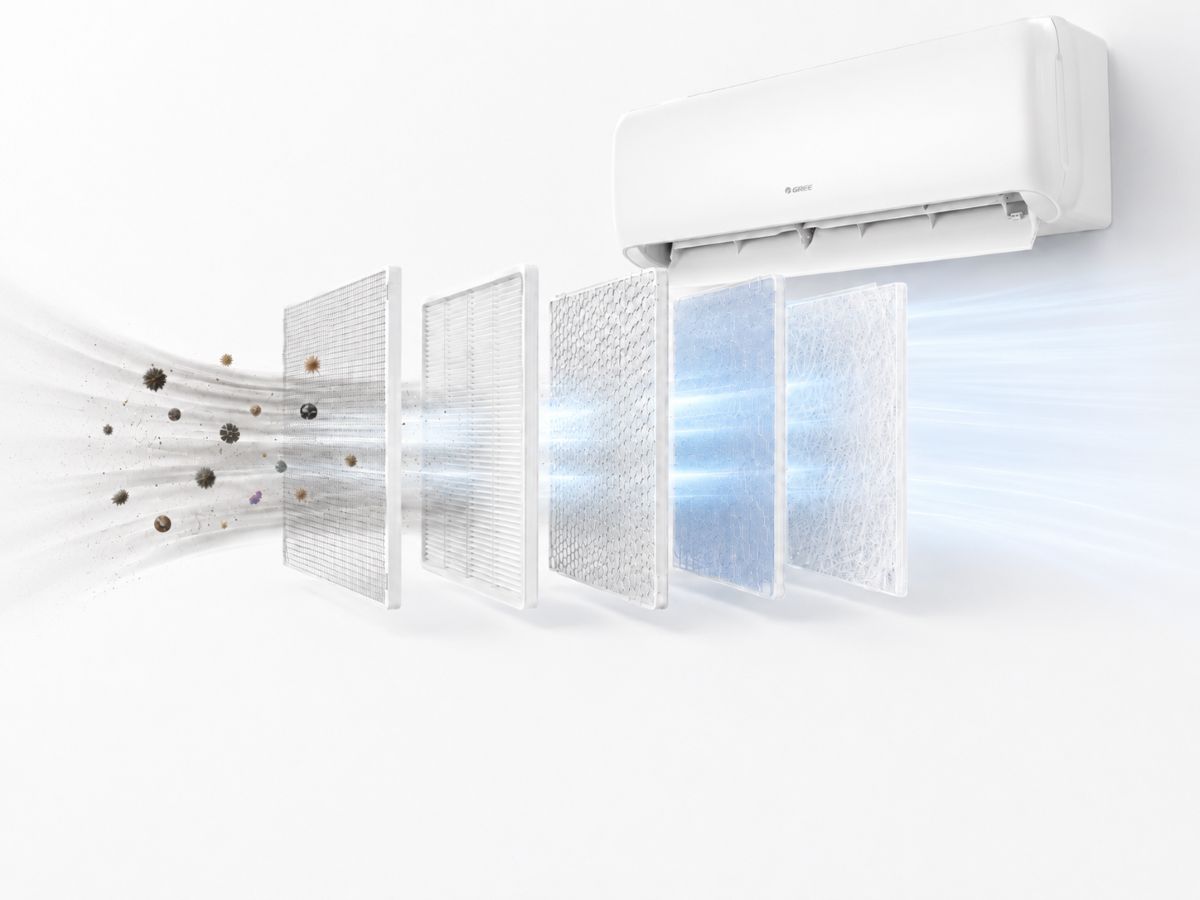
The series also comes with everyday-use features like 3D airflow, I-Feel temperature sensing, seven fan speeds, fast cooling, and GREE+ app connectivity, plus a five-layer filtration system and cold plasma air purification.
If you’re comparing an affordable aircon, it’s worth checking these specs alongside the actual quotation, the NEA Energy Label, and the installation package — not just the price on its own.
Choosing the Right Aircon for Your Home
When it comes to aircon price Singapore, the lowest quote is rarely the smartest choice. What actually matters is your room layout, cooling needs, number of indoor units, installation conditions, and how you plan to use it.
The NEA Energy Label is a useful reference too, especially now that minimum efficiency standards for split aircons have gotten stricter.
If you’re looking for an affordable aircon, the smarter approach is to weigh the whole package together: upfront price, cooling capacity, NEA rating, installation scope, and long-term running costs.
Please contact us if you have any questions about getting the right aircon for your home. Our team of engineers will be there to answer your questions and help you find the right fit for your house.